Overview:
Customer Maintenance is used to create, update, and manage customer master records in QNE Optimum. Customer records serve as the primary source of customer information for sales transactions, receivables management, reporting, and customer-related controls.
This function is typically used by accounts receivable personnel, sales administrators, customer service teams, and system administrators responsible for maintaining customer data.
Maintaining accurate customer records helps support consistent transaction processing, reliable reporting, and proper application of customer-specific settings such as payment terms, credit controls, pricing arrangements, and contact information where configured. Customer-related settings may be maintained based on the organization's configuration.
Prerequisites:
The user has permission to maintain Customer records.
Customer Control Accounts have been configured.
Payment Terms have been created.
Currencies have been configured, if multi-currency is enabled.
Customer Categories, Account Groups, Agents, and Price Groups have been configured, if applicable.
Default VAT and WTax codes have been configured, if required.
Scenario:
A company begins doing business with a new customer and needs to create sales and accounts receivable transactions for that customer.
Before transactions can be recorded, the customer record must be created and maintained with the necessary business information. Maintaining the customer record ensures that customer details remain consistent across sales and accounts receivable processes.
Procedure 1: Recording a New Customer Profile
Open the Customer Maintenance function within the system.
Go to Customer > Customers.
If the Customer List opens, click New to create a new customer profile.
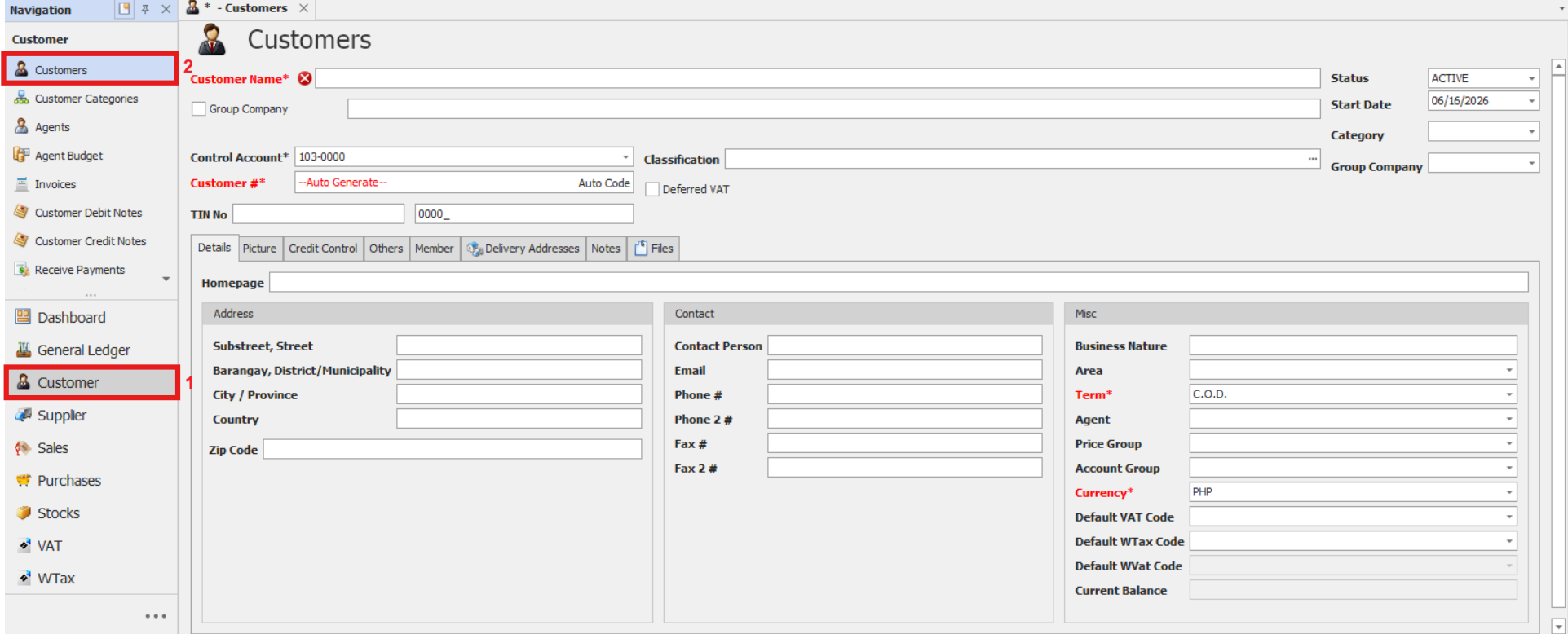
Complete the Customer Details
Fill in the relevant customer information to ensure the system can process transactions accurately and generate complete reports:
Important Fields:
Customer Name - Official registered name of the customer.
Customer # - Enter the customer code or use the system-generated code, if configured.
Term - Set appropriate credit terms.
Control Account - Select the correct Customer posting account or the parent customer control account.
Currency - Choose the default currency for billing (e.g., PHP, USD).
Additional Fields:
Classification - Customer classification used for tax reporting or customer categorization, if applicable.
TIN – Tax Identification Number (if applicable).
Branch Code - Enter the customer's registered branch code, if applicable.
Homepage - Customer’s official website, if available.
Address Fields (Substreet, Street, Barangay, District/Municipality, City/Province, Country, ZIP Code) - Address information used for customer correspondence, billing, shipping, or reporting purposes, as applicable.
Business Nature - Type of business or industry of the customer.
Customer Name 2 - Secondary name of Customer
Contact Person - Customer contact person.
Email – Customer’s official email address.
Phone # - Primary contact number.
Phone 2 # - Secondary contact number.
Fax # - Primary fax number
Fax 2 # - Secondary fax number.
Business Nature - Type of business or industry of the customer.
Area - Location where customer is located.
Agent - Assign an agent, if applicable.
Category - Optional grouping for customer segmentation.
Group Company - Indicates whether the customer belongs to a group of related companies.
Price Group - Pricing category applied when creating sales transactions.
Account Group - Customer grouping for accounting and reporting purposes.
Default VAT Code - Default VAT code associated with the customer, if configured.
Default WTAX Code - Default withholding tax code associated with the customer, if configured.
Save the Customer Record:
Once all fields are filled out and verified:
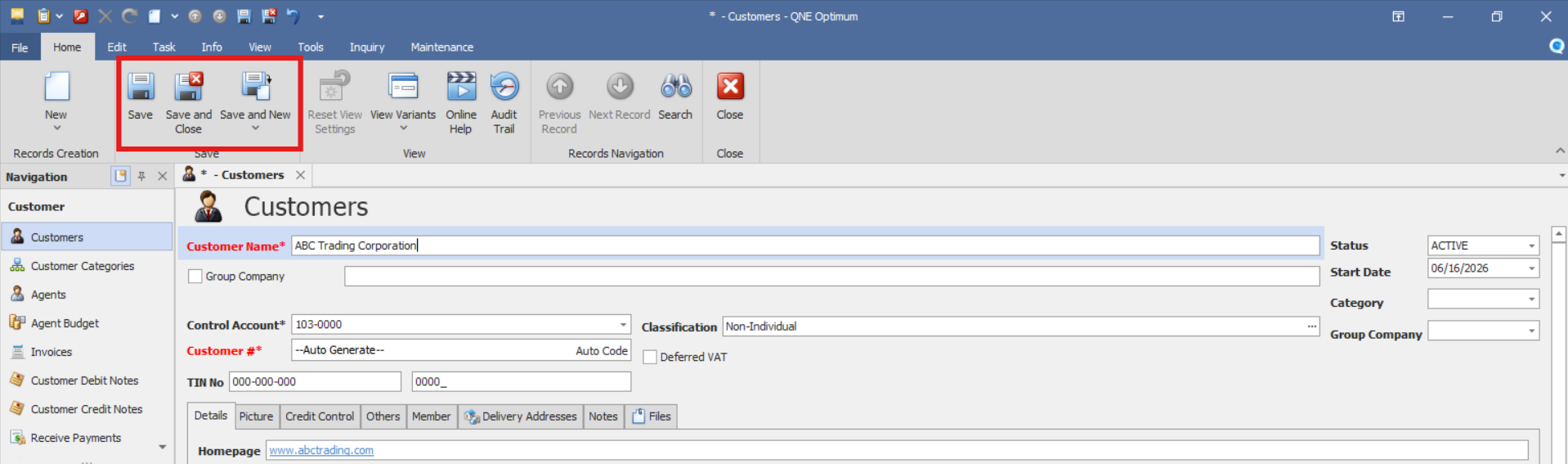
Click Save to complete the entry.
Or click Save & Close to save and close the window.
Or choose Save & New to save and create another customer.
Verify that the customer record appears in the customer list and that the customer details were saved correctly.
Procedure 2: Editing or Modifying a Customer Profile
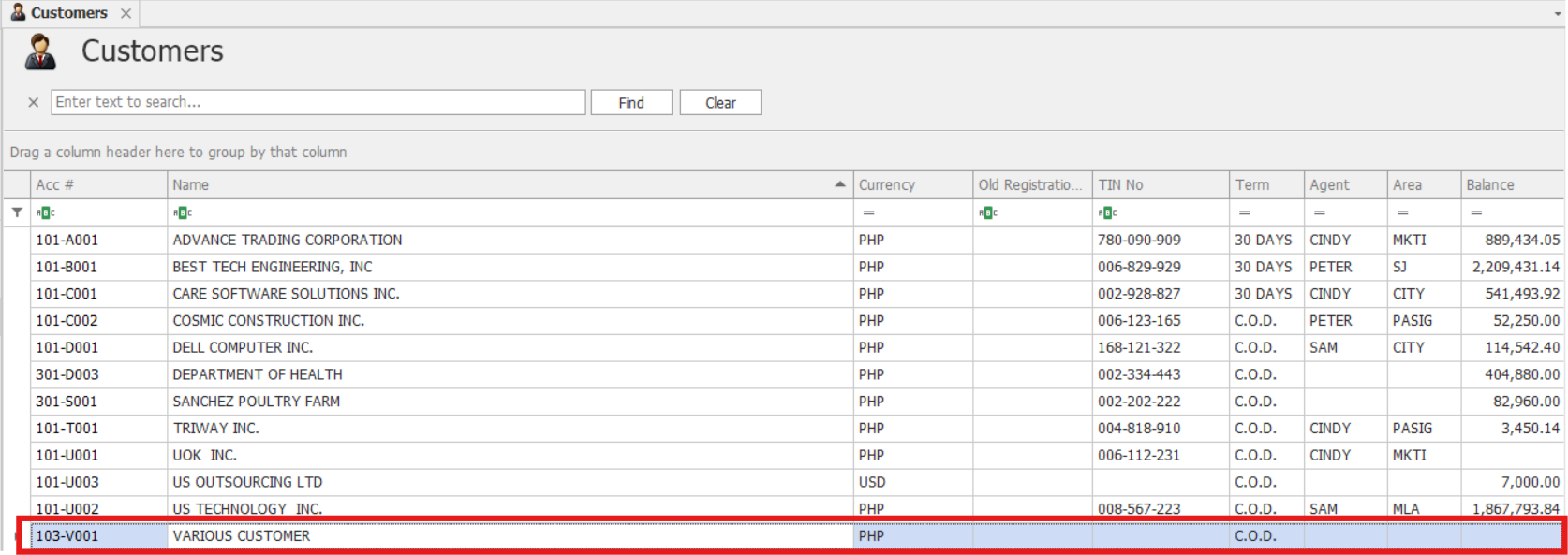
Go to Customer > Customers, then select the Customer profile that you want to update.
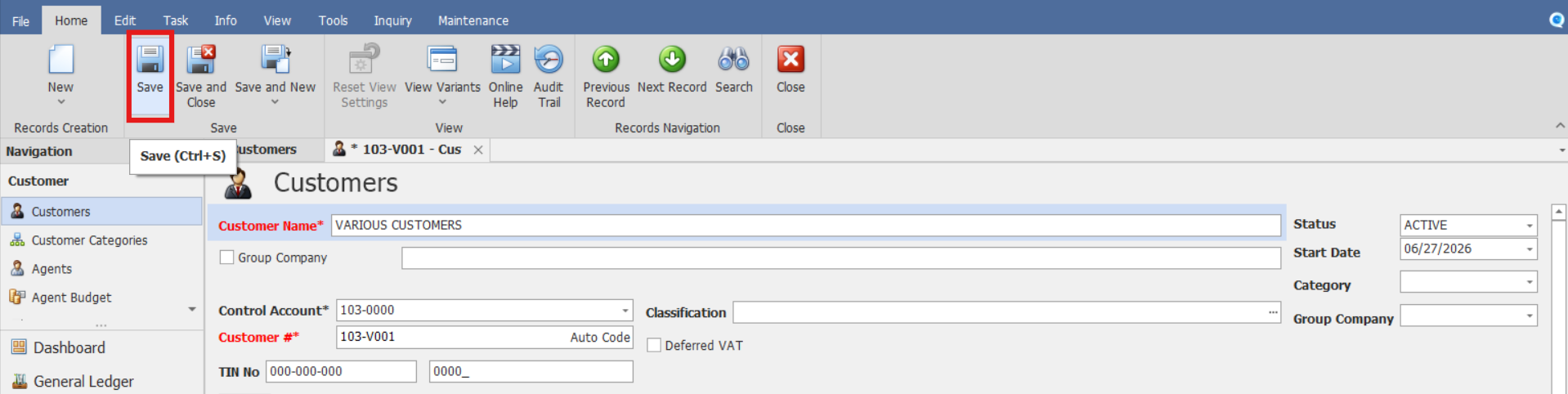
Once opened, make the required changes, then click Save.
Procedure 3: Deleting a Customer Profile
In the Customers List View, identify the customer profile you wish to delete. Hover your cursor over the document and right-click on it. Then click Delete to remove the transaction.
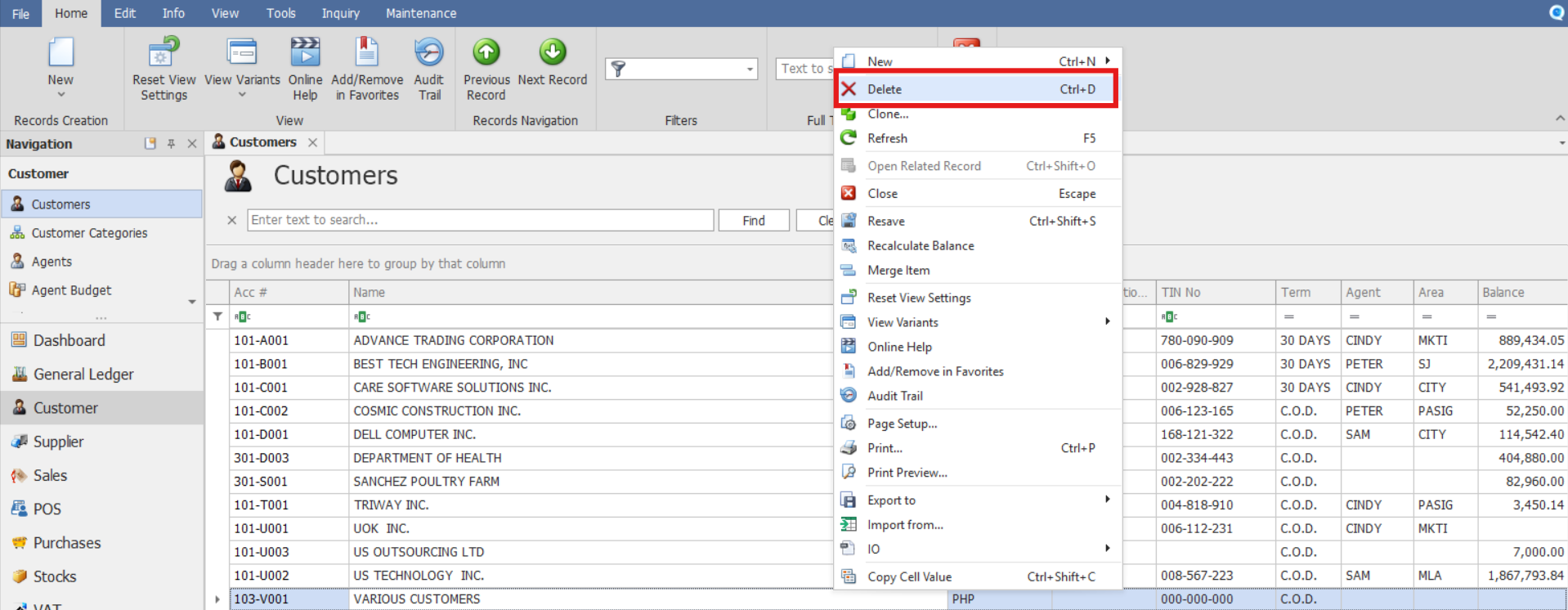
Verify that the Customer profile no longer appears in the Customers List.
The Customer profile will not be deleted if it is used in any transactions recorded in the system.
Example Scenario:
ABC Trading Corporation will be billed monthly and has agreed to 30-day payment terms.
Here’s how you'd set them up in QNE Optimum:
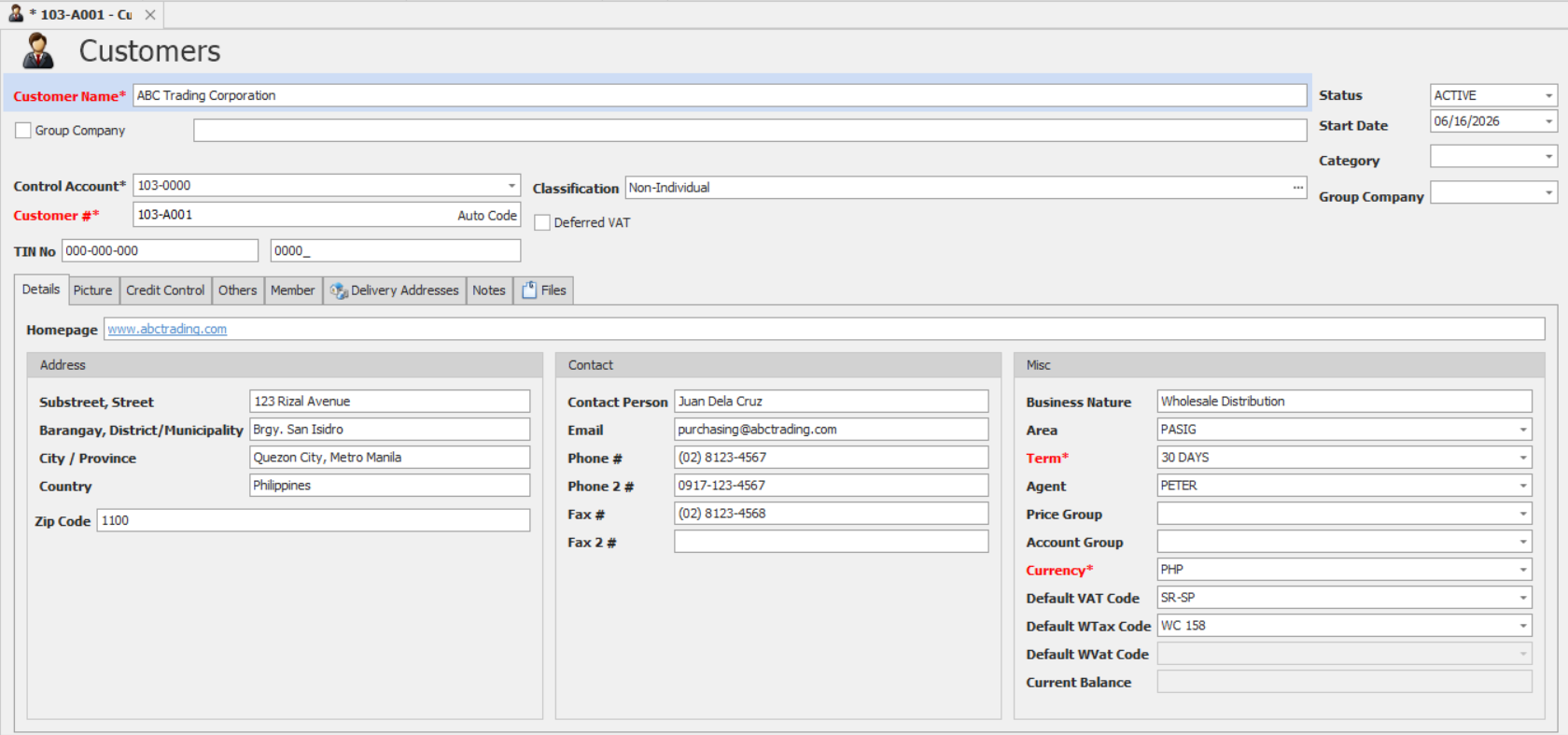
Customer Code: 103-A001
Customer Name: ABC Trading Corporation
Classification: Provide necessary taxpayer information
TIN: Enter their provided tax ID
Control Account: The designated Customer Control Account.
Currency: Set to PHP
Term: Net 30 Days / Specified Payment Terms assigned to Customer.
Phone 1 / Phone 2: Add available contact numbers
Fax 1 / Fax 2: Include if applicable
Address / Email: Input for document delivery, forms generation, and follow-ups
Default VAT/WTAX Code: Tag if applicable.
Application:
Customer Information Management
Maintain a centralized repository of customer information.Sales Processing
Support sales transaction processing and customer account management.Customer-Specific Configuration
Maintain customer payment, pricing, and business settings.Cross-Department Consistency
Improve consistency of customer data across departments.Accounts Receivable Monitoring
Support customer credit and receivable management where configured.Reporting Accuracy
Improve reporting accuracy through properly maintained customer master records.
Once configured in QNE Optimum, these customer settings can be used as default values when creating transactions, helping improve speed, accuracy, and consistency across billing and reporting processes.
System Scope: QNE Optimum
Was this article helpful?
That’s Great!
Thank you for your feedback
Sorry! We couldn't be helpful
Thank you for your feedback
Feedback sent
We appreciate your effort and will try to fix the article