Recording past supplier debit notes allows businesses to establish historical Accounts Payable (AP) transactions that increase supplier balances before the accounting start date. This process is commonly performed during system migration, opening balance setup, or when transferring records from a legacy accounting system.
Past supplier debit notes are typically recorded to reflect additional supplier charges, purchase adjustments, or other historical transactions that increase outstanding supplier balances before migration to the new system.
Depending on business requirements, past transactions may be recorded either as:
Consolidated balances per supplier, or
Itemized historical documents based on original debit note references
When recording historical transactions, ensure that:
Outstanding supplier debit note balances are verified against prior accounting records
Related historical bills, payments, or credit notes are also considered to maintain accurate supplier balances
The Accounts Payable opening balance is derived from the net effect of:
Past Supplier Bills
Past Supplier Debit Notes
Past Pay Bills
Past Supplier Credit Notes
Only outstanding balances as of the accounting start date should be recorded.
Scenario:
Your company is migrating from a legacy accounting system to QNE Optimum for the January to December 2015 financial year. As part of the migration, the company needs to record all outstanding supplier debit notes dated before January 1, 2015, so that supplier balances and Accounts Payable reports remain accurate in the new system.
Some suppliers have a single outstanding debit note balance, while others require individual historical debit notes to be recorded separately for tracking and reconciliation purposes.
Prerequisites:
Supplier master records must already exist in the system.
The financial year and opening balance period must already be configured.
Outstanding supplier debit note balances must be verified against the previous accounting records before migration.
The user has permission to create Past Supplier Debit Notes.
Historical supplier debit note schedules or migration documents are available for reference.
Procedure 1: Recording a Past Supplier Debit Note
Prepare the list of outstanding supplier debit notes from the legacy records or prior accounting system.
Verify that the debit note balances represent outstanding supplier debit note amounts as of the accounting start date.
Review whether the debit notes will be recorded as:
Consolidated balances per supplier, or
Individual historical debit note transactions
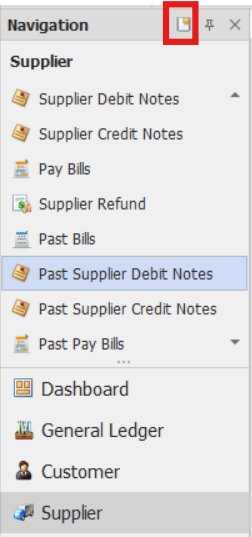
In the navigation pane, go to Supplier > Past Supplier Debit Notes.
Note: If the Quick Create Icon (the one inside the red box) is highlighted, clicking Past Supplier Debit Notes will immediately redirect you to the new Past Supplier Debit Notes transaction form. If the Quick Create Icon is not highlighted, you will be directed to the Past Supplier Debit Notes Listing instead.
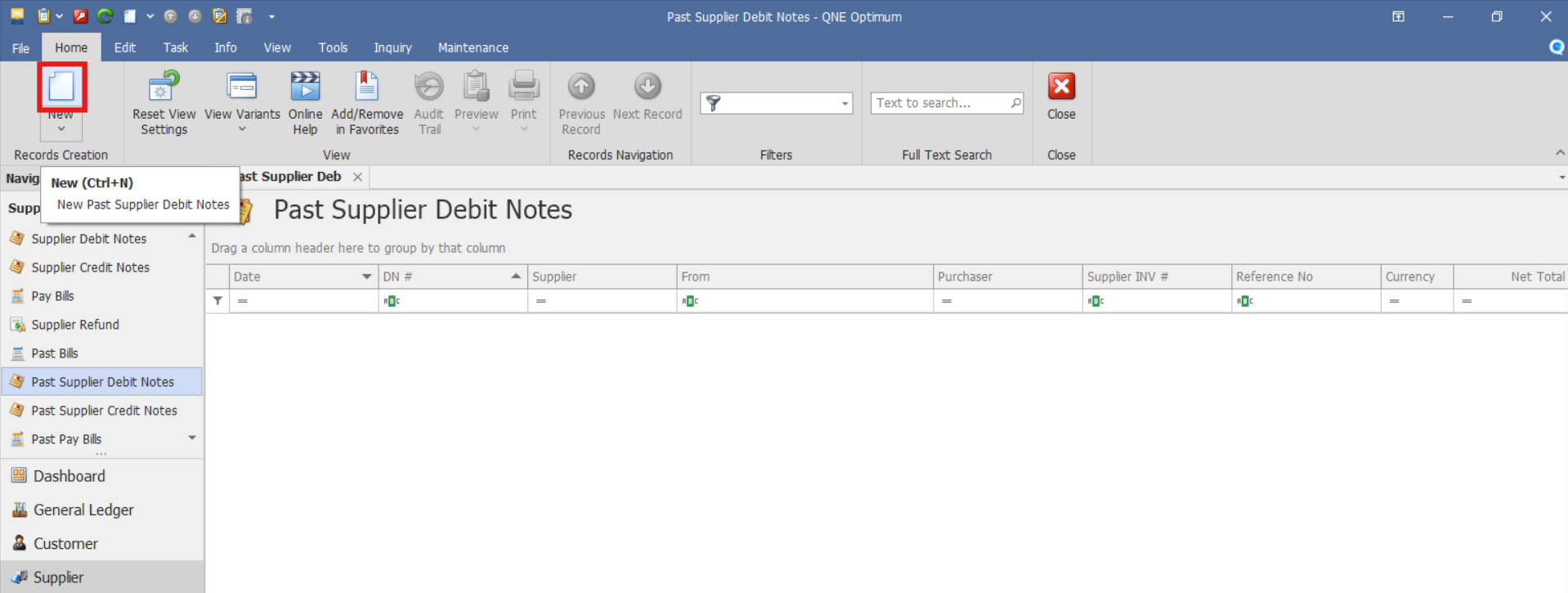
From there, select the New button to create a new Past Supplier Debit Note.
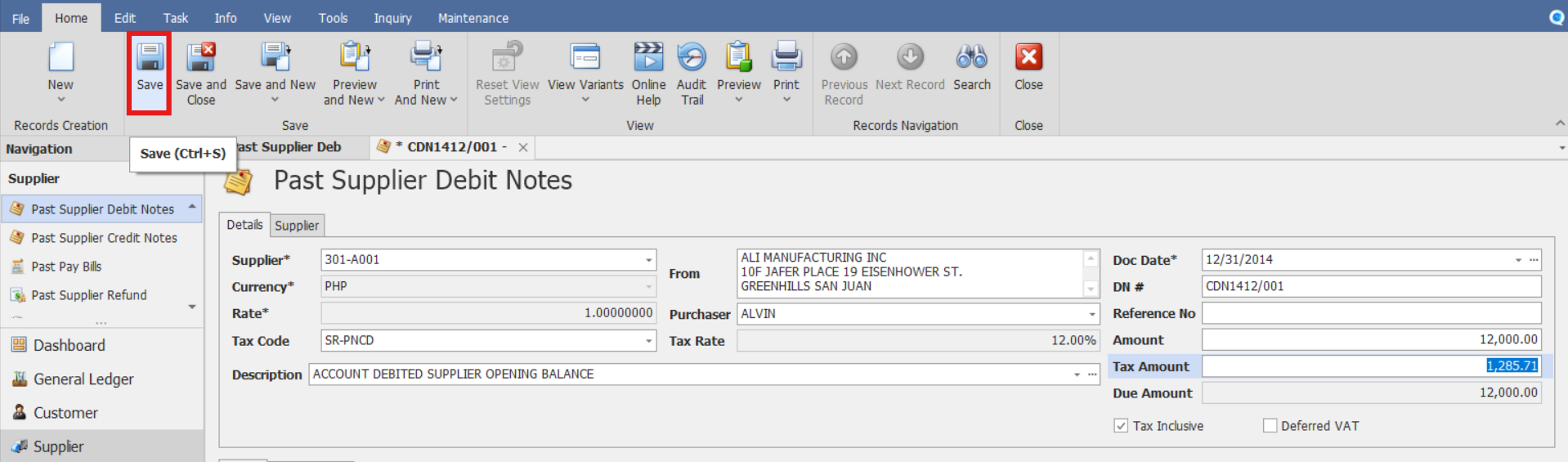
Select the Supplier and enter the historical supplier debit note details, such as:
DN #
Reference No
Description
Doc. Date (Enter or verify the document date for the historical supplier debit note.)
Purchaser (Employee or purchaser responsible for the procurement transaction. Used for tracking and reporting purposes.)
Amount
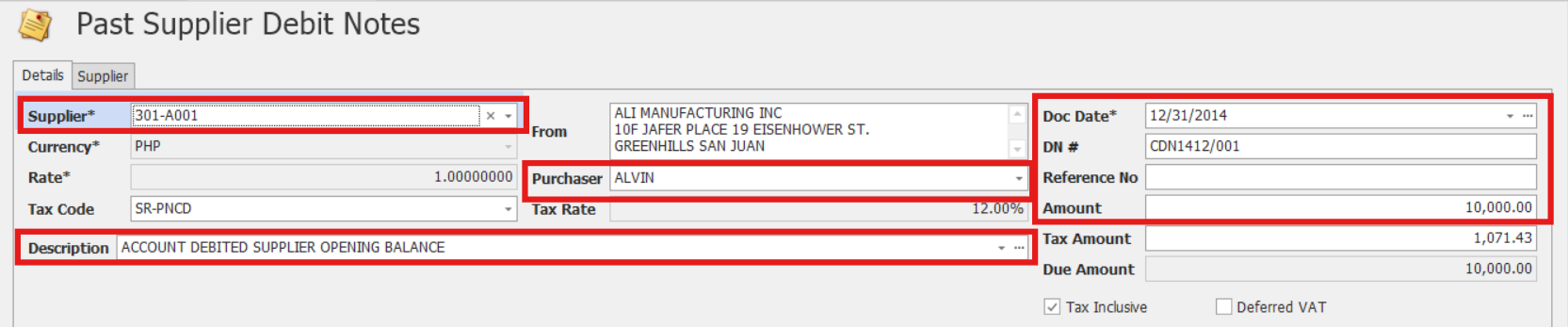
Review the entered amounts carefully and save the transaction.
Note: If Tax/VAT details are entered for historical reference purposes, the VAT portion does not generate a separate posting to the VAT General Ledger account because only the outstanding payable balance contributes to the Accounts Payable opening balance.
Repeat the process for all remaining outstanding debit notes.
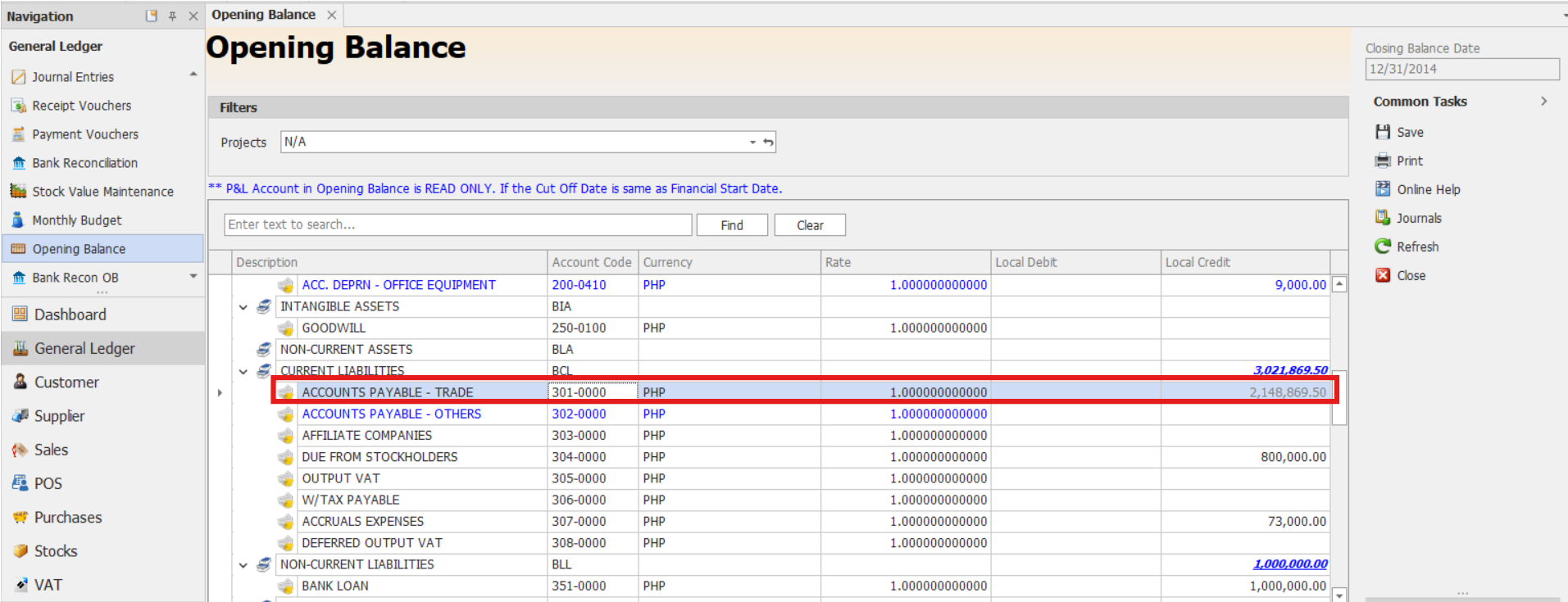
After all entries are completed, review the reflected opening Accounts Payable balance in General Ledger > Opening Balances
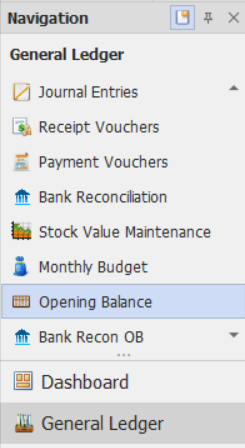
Verify the recorded balances match the historical records.
Procedure 2: Validation of Recorded Past Supplier Debit Note
After saving the transaction, verify that:
The Past Supplier Debit Note is saved successfully.
The past supplier debit note number is generated or displayed correctly.
The transaction displays the correct outstanding supplier credit balance.
Verify that the past supplier debit note appears in the Past Supplier Debit Note List.
Procedure 3: Editing a Past Supplier Debit Note
Go to Supplier > Past Supplier Debit Notes, then select the Doc # of the Past Supplier Debit Note that you want to update.

Once opened, make the required changes, then click Save.
Procedure 4: Deleting a Past Supplier Debit Note
In the Past Supplier Debit Note List View, identify the document you wish to delete. Hover your cursor over the document and right-click on it. Then click Delete to remove the transaction.

Verify that the Past Supplier Debit Note no longer appears in the Past Supplier Debit Notes List.
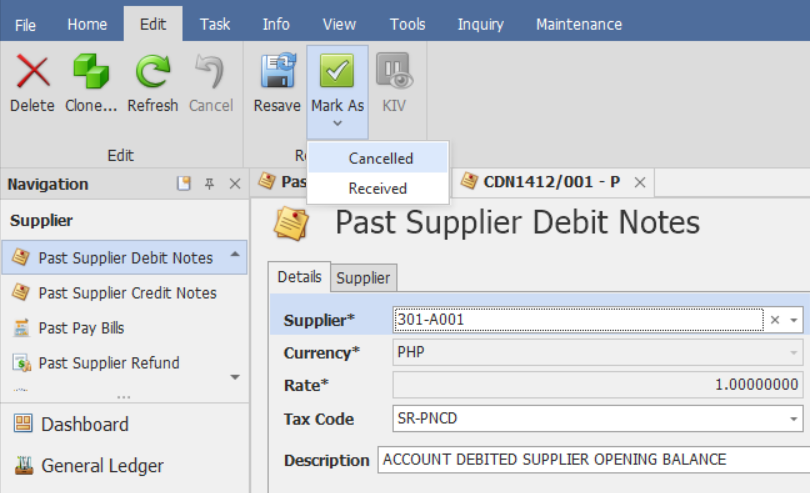
Preferred Method: If the Past Supplier Debit Note is no longer required, click Cancel instead. This preserves the transaction history while marking it as inactive.
Application (General Use Cases):
Past Supplier Debit Notes are used to
System Migration
Transfer outstanding supplier debit note balances from a legacy accounting system.Opening Balance Setup
Establish opening Accounts Payable balances involving historical supplier charges.Supplier Balance Continuity
Maintain continuity of supplier balance records after migration.Historical Reconciliation
Support reconciliation of historical supplier debit note balances.Accounts Payable Reporting
Help maintain continuity and accuracy of Accounts Payable reporting.Audit and Historical Reference
Retain historical supplier debit note records for audit and tracking purposes.
System Scope: QNE Optimum
Was this article helpful?
That’s Great!
Thank you for your feedback
Sorry! We couldn't be helpful
Thank you for your feedback
Feedback sent
We appreciate your effort and will try to fix the article