Supplier Credit Notes are used to record deductions against a supplier’s outstanding payable. This commonly applies in cases such as purchase returns, pricing adjustments, or billing corrections, where the amount owed to the supplier needs to be reduced.
Scenario:
A supplier issues a credit note to deduct an amount from an existing payable, usually when the related purchase invoice has not yet been fully settled.
Procedure 1: Recording a Supplier Credit Note
Go to Supplier > Supplier Credit Notes
Note: If the Quick Create Icon (the one inside the red box) is highlighted, clicking Supplier Credit Notes will immediately redirect you to the new Supplier Credit Notes transaction form. If the Quick Create Icon is not highlighted, you will be directed to the Supplier Credit Note Listing instead.
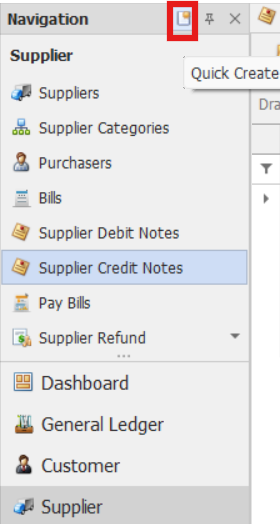
From there, select the New button to create a new Supplier Credit Note transaction.
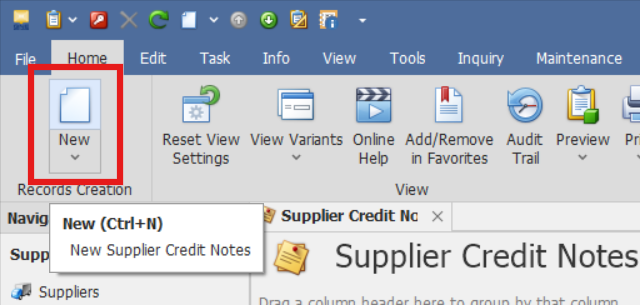
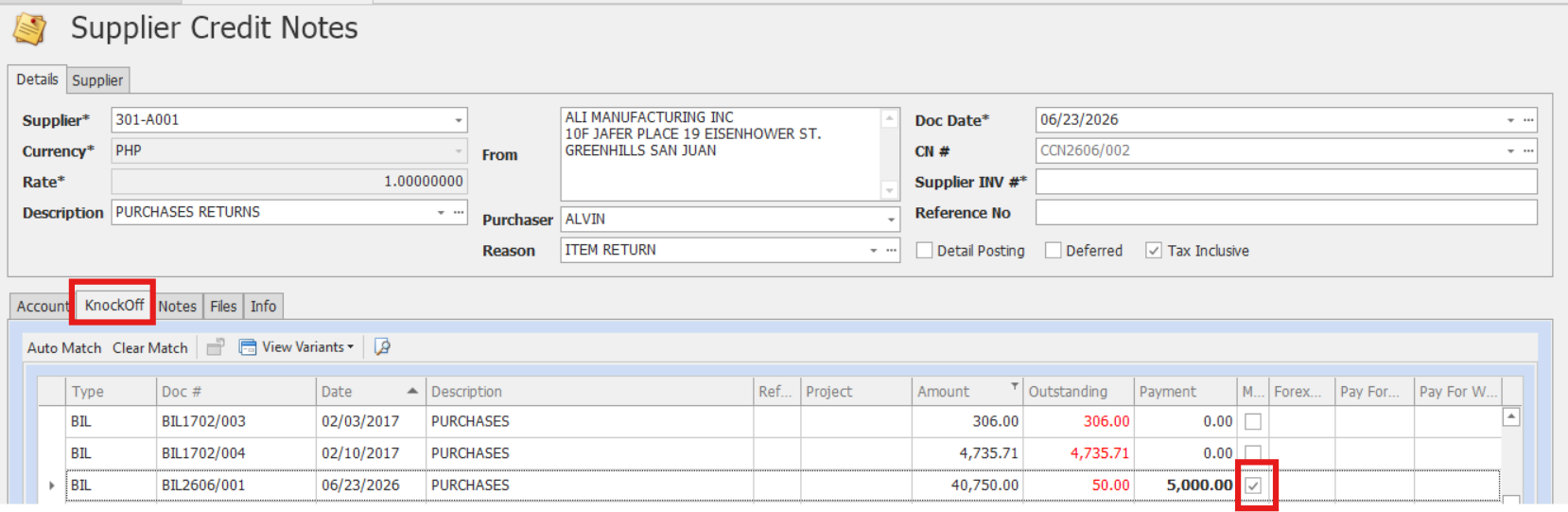
Enter the necessary information:
In the header section, enter the required transaction information.
Supplier – Select the supplier associated with the credit note.
Doc Date – Date the supplier credit note is recorded or issued.
Supplier INV # - Invoice number issued by the supplier.
CN# - Unique Credit Note number assigned by the system.
You may also enter additional information if applicable:
Description – Brief explanation of the credit note.
Purchaser – Employee responsible for the purchase transaction.
Reason - Specifies the reason for issuing the supplier credit note.

Under the Details tab, enter the purchased item details:
Acc Code – General Ledger account code where the purchase or expense will be recorded.
Acc Desc – Description of the selected General Ledger account.
Description – Additional explanation for the account entry or expense line.
Reference No. – Reference number associated with the individual account entry, if applicable.
Project - Project code assigned to the expense for project costing and reporting.
Tax Code - Tax classification assigned to the transaction line, if applicable.
WTax Code – Withholding tax code assigned to the transaction line, if applicable.
Amount - Amount of the supplier adjustment recorded for the selected account.

Apply the Credit Note to Outstanding Payables:
Go to the Knockoff tab to view all outstanding payables for the selected supplier. Tick the transaction(s) where the credit note will be applied to deduct the payable, then click Save.
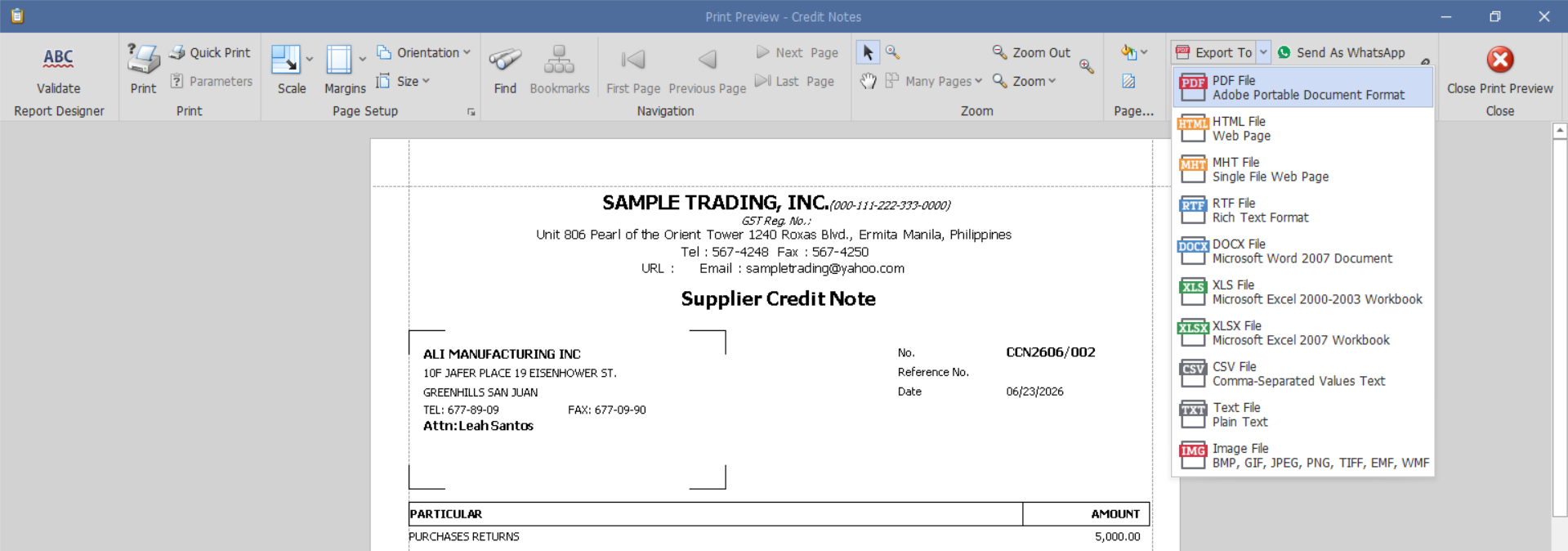
Preview the Credit Note Voucher.
After saving, click the Preview button to view the Credit Note Voucher Form.
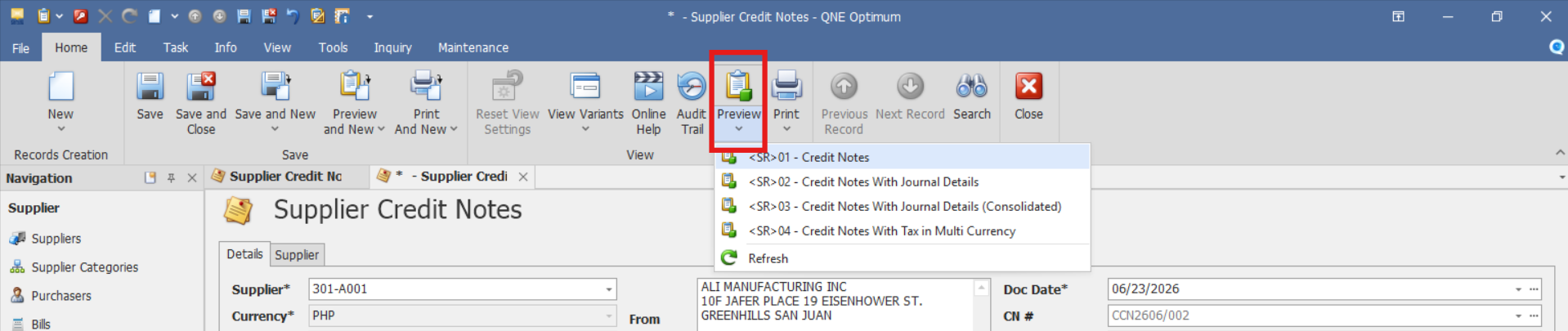
This can be printed or exported as needed for documentation and audit.
Procedure 2: Editing a Supplier Credit Note
Go to Supplier > Supplier Credit Notes, then select the Doc # of the Supplier Credit Note that you want to update.

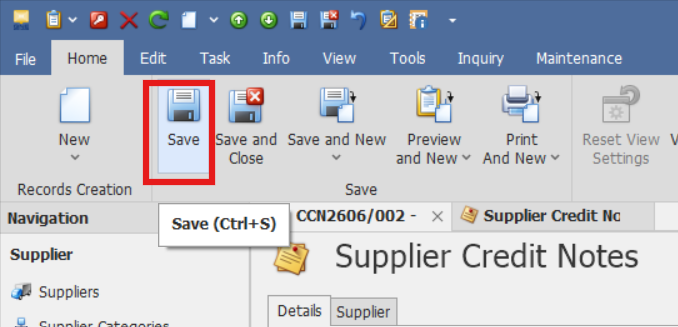
Once opened, apply necessary adjustments on the document. Click Save to implement changes.
Procedure 3: Deleting a Supplier Credit Note
In the Supplier Credit Note List View, identify the document you wish to delete. Hover your cursor over the document and right-click on it. Then click Delete to remove the transaction.

The document will be deleted in the Supplier Credit Note list.
Application:
Supplier Credit Notes can be used to:
Reduce outstanding supplier payables.
Reverse expenses or inventory where appropriate.
Maintain accurate General Ledger postings.
Important Notes:
Editing and Deleting Transactions: Editing and deletion permissions may be restricted based on system configuration, organizational policy, or applicable regulatory requirements (CAS Approval). It's vital to adhere to your company's internal policy regarding these functionalities. It is generally advisable to disable or limit the ability to edit/delete to maintain compliance with regulations.
System Scope: QNE Optimum
Was this article helpful?
That’s Great!
Thank you for your feedback
Sorry! We couldn't be helpful
Thank you for your feedback
Feedback sent
We appreciate your effort and will try to fix the article