Recording customer invoices accurately in QNE Optimum is essential for managing your revenue, tracking receivables, and ensuring your financial reports reflect real-time business performance. This guide provides a detailed walk-through of how to enter a customer invoice in QNE Optimum, highlighting important fields, tips, and examples to help streamline your billing process.
Prerequisites
Customer record exists.
General Ledger revenue accounts have been configured.
Tax codes are configured, if applicable.
Payment terms have been defined, if applicable.
The user has permission to record Customer Invoices.
Scenario:
You’ve recently completed a service for a client or delivered goods and are now ready to bill them. You need to issue a customer invoice that includes the correct customer details, invoice date, due terms, itemized charges, taxes, and remarks. This invoice will then be recorded in QNE Optimum to support receivable tracking and follow-up activities.
Procedure 1: Recording a Customer Invoice
In the Navigation Pane, go to Customer > Invoices.
Note: If the Quick Create icon is enabled (the highlighted button in the red box), selecting Invoices opens the new Invoice transaction form. Otherwise, the Invoices List opens.
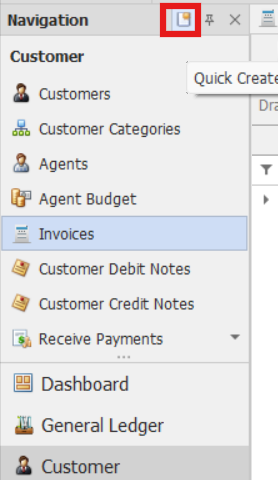
From there, select the New button to create a new Invoice transaction.

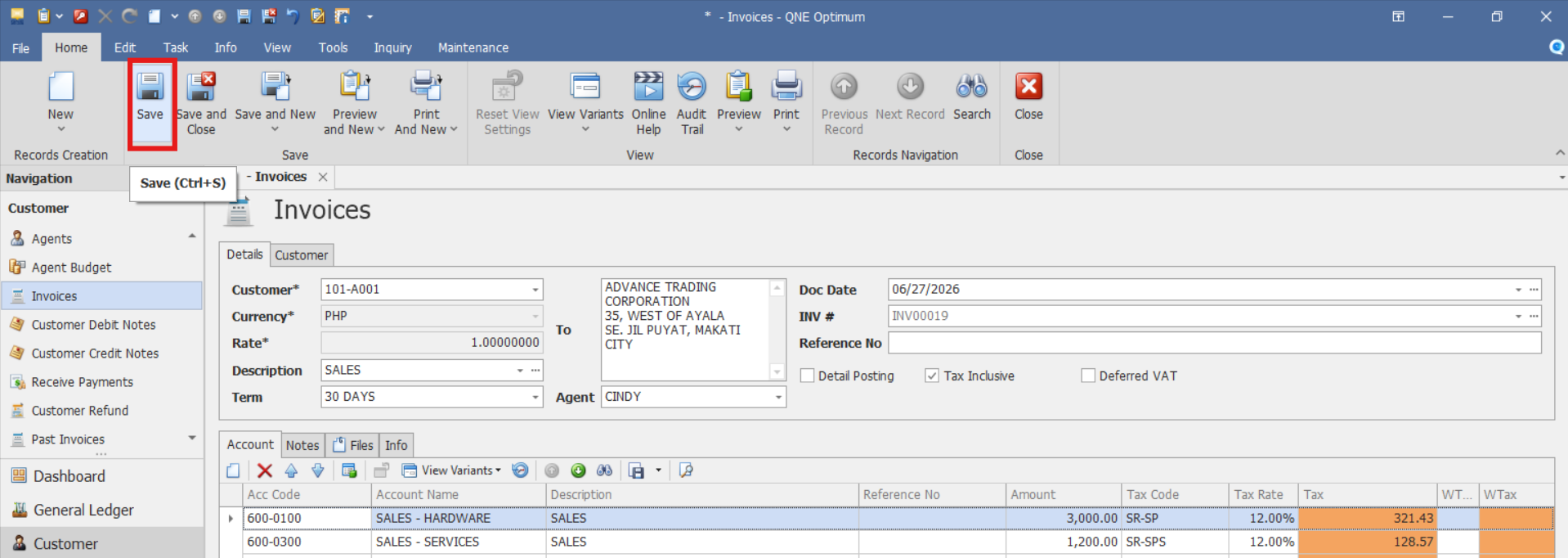
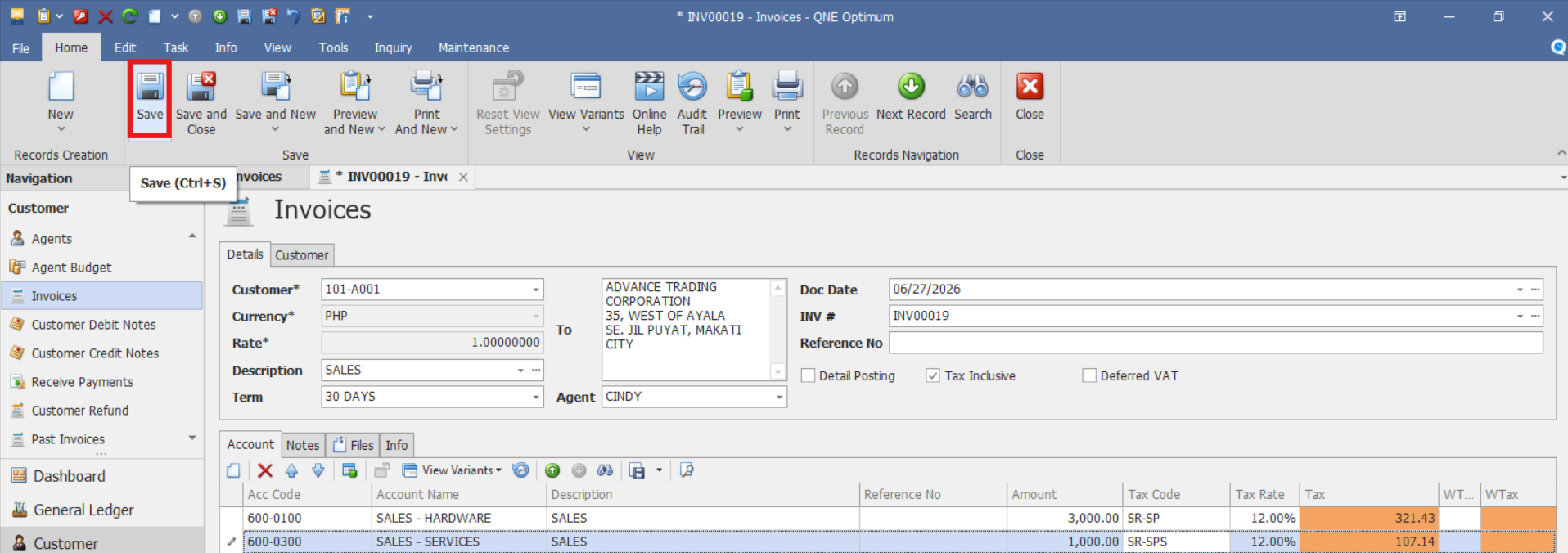
Complete the required fields in the invoice header.
Customer – Select the customer being billed for the service or miscellaneous charge.
Description – Brief explanation of the invoice, such as "Sales," "Consulting Services," "Rental Charges," or "Professional Fees."
Term – Payment terms granted to the customer, such as C.O.D., 30 Days, or 60 Days.
Agent - Salesperson or account manager responsible for the transaction.
Reference No. - Internal reference number used for tracking purposes, if applicable.
Doc Date – Date the Invoice is created or issued.
INV #. – Unique invoice number assigned by the system.
Tax Inclusive – Enable if prices include tax.

In the Details section, enter the item information
Acc Code – General Ledger account code where the revenue or charge will be recorded.
Account Name – Description of the selected General Ledger account.
Description – Additional explanation of the service or charge being billed.
Reference No. - Reference number associated with the individual account line, if applicable.
Amount – Amount being charged to the customer for the service or miscellaneous income.
Tax Code - Tax code assigned to the invoice item, if applicable.
WTAX Code - Withholding tax code assigned to the invoice item, if applicable.
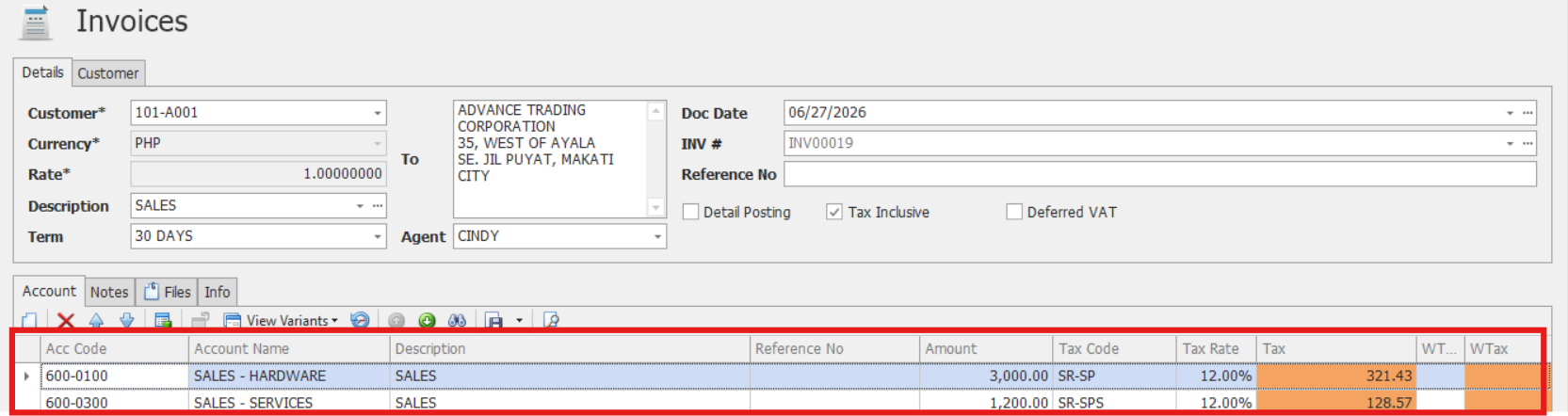
Confirm that the totals are calculated correctly and reflect all adjustments. Then proceed by clicking Save.
Procedure 2: Validation of Recorded Customer Invoice
After saving the transaction, verify that:
The invoice is saved successfully.
The invoice number is generated or displayed correctly.
The totals reflect the entered pricing, discounts, and taxes.
Verify that the Invoice appears in the Invoices List.
Procedure 3: Editing a Customer Invoice
Go to Customer >Invoices, then select the Doc # of the Invoice that you want to update.
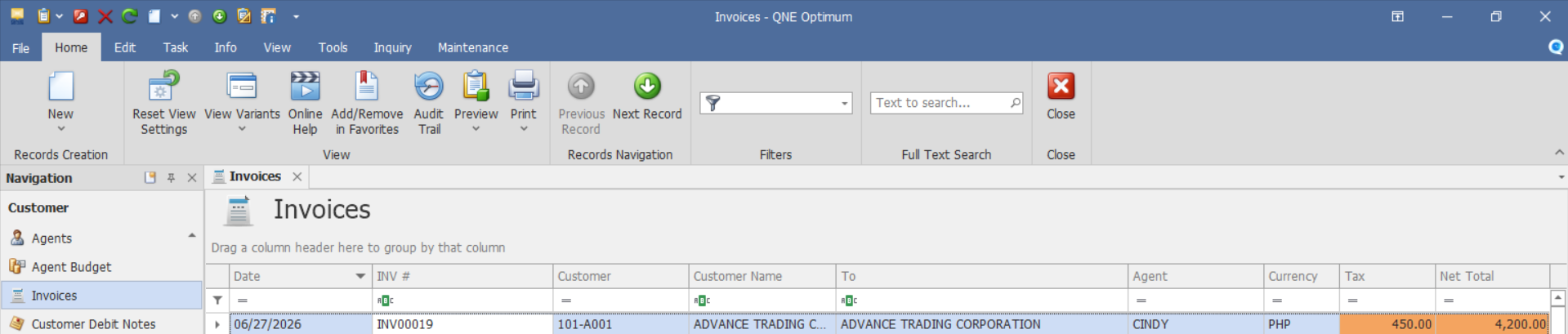
Once opened, make the required changes, then click Save.
Procedure 4: Deleting a Customer Invoice
In the Invoices List View, identify the document you wish to delete. Hover your cursor over the document and right-click on it. Then click Delete to remove the transaction.
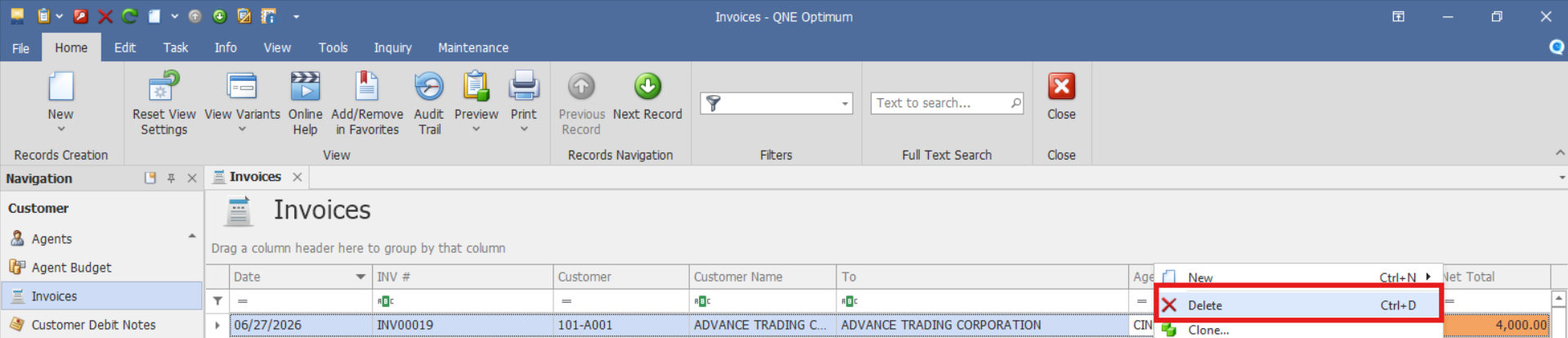
Verify that the Invoice no longer appears in the Invoices List.
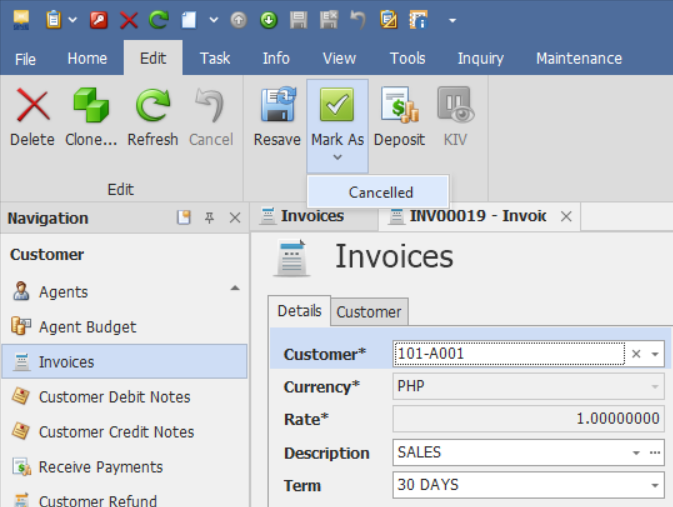
Preferred Method: If the Invoice is no longer required, click Cancel instead. This preserves the transaction history while marking it as inactive.
Application:
Customer Invoices can be used to:
Service Billing
A consulting company completes a project and issues an invoice to bill the customer for professional services rendered.Miscellaneous Charges
A company invoices a customer for freight charges, administrative fees, or other non-inventory charges.Recurring Customer Charges
A business records monthly rental or maintenance fees that will be collected at a later date.Accounts Receivable Tracking
Customer Invoices record outstanding balances and support monitoring of customer receivables and collection activities.
These examples align with the nature of the transaction, which appears to be a non-inventory customer invoice entry screen using GL account codes rather than stock items.
Important Notes:
Editing and Deleting Transactions: Editing and deletion permissions may be restricted based on system configuration, organizational policy, or applicable regulatory requirements (such as CAS approval, where applicable). Ensure modifications and deletions follow your organization's internal policies and applicable regulatory requirements.
System Scope: QNE Optimum
Was this article helpful?
That’s Great!
Thank you for your feedback
Sorry! We couldn't be helpful
Thank you for your feedback
Feedback sent
We appreciate your effort and will try to fix the article