A Purchase Order (PO) is an official document issued by a company to a supplier to request goods or services. In accounting systems like QNE Optimum, creating a Purchase Order helps businesses control purchasing, track commitments, and maintain proper documentation before goods are received or invoices are recorded.
This feature is typically used by procurement teams, accountants, or business owners to formalize purchasing requests and maintain proper transaction tracking before receiving goods or services.
This guide walks you through the process of creating a Purchase Order within QNE Optimum, which helps maintain consistent supplier transaction records and supports inventory and financial management.
Scenario:
A company needs to order office supplies from a supplier. Before the supplier delivers the items, the company creates a Purchase Order in the system to formally document the request, specify quantities and prices, and track the expected delivery.
The Purchase Order will later be used as a reference when receiving goods and processing supplier invoices.
Procedure: Creating Purchase Orders
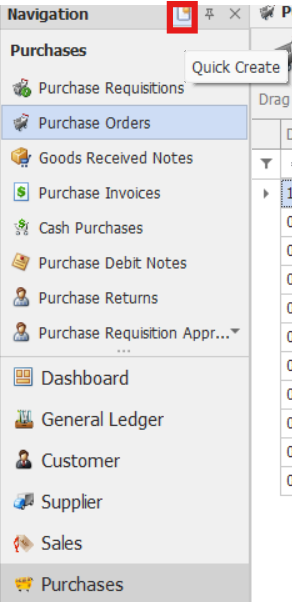
1. In the navigation pane, go to the Purchases > Purchase Orders
Note: If the Quick Create Icon (the one inside the red box) is highlighted, clicking Purchase Orders will immediately redirect you to the new Purchase Order transaction form. If the Quick Create Icon is not highlighted, you will be directed to the Purchase Order Listing instead.
From there, select the New button to create a new Purchase Order transaction.
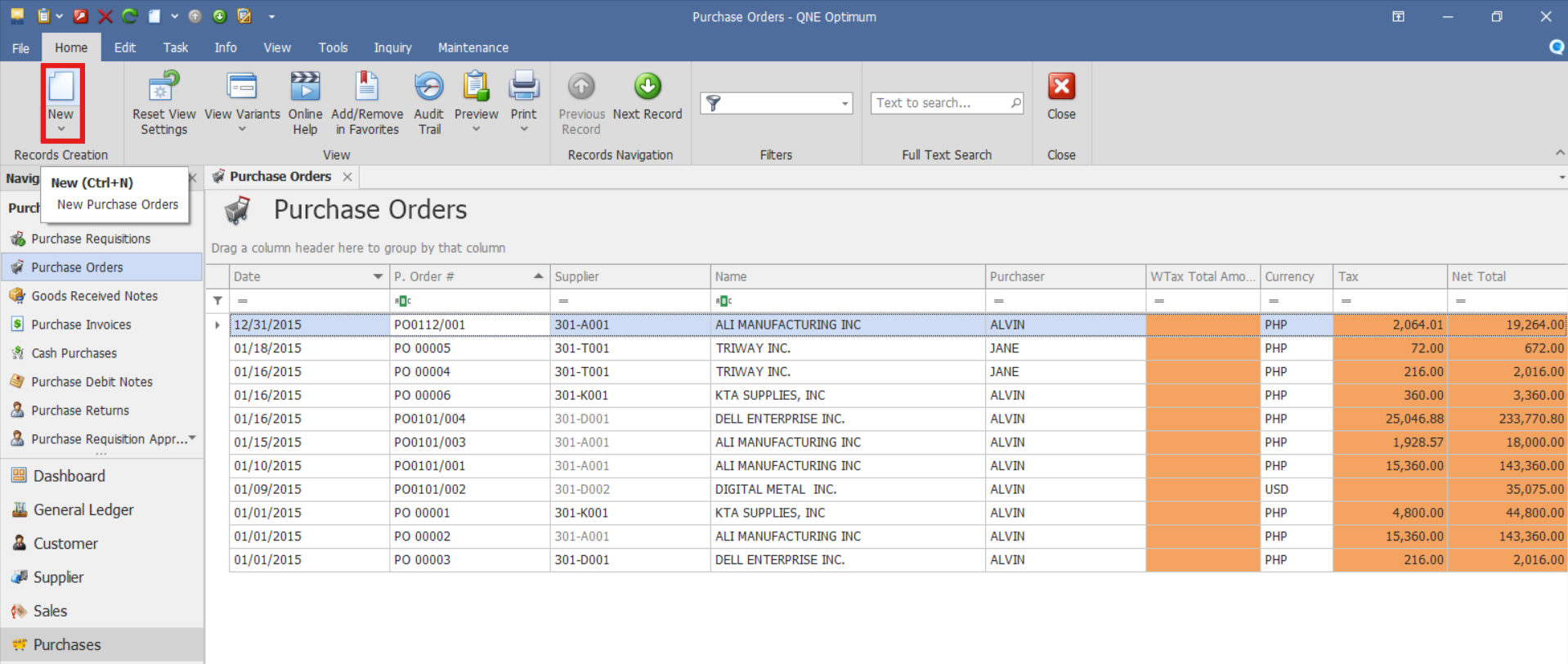
There are two options available for creating a Purchase Order:
Option 1: Create a Purchase Order by transferring the details from the Purchase Requisition.
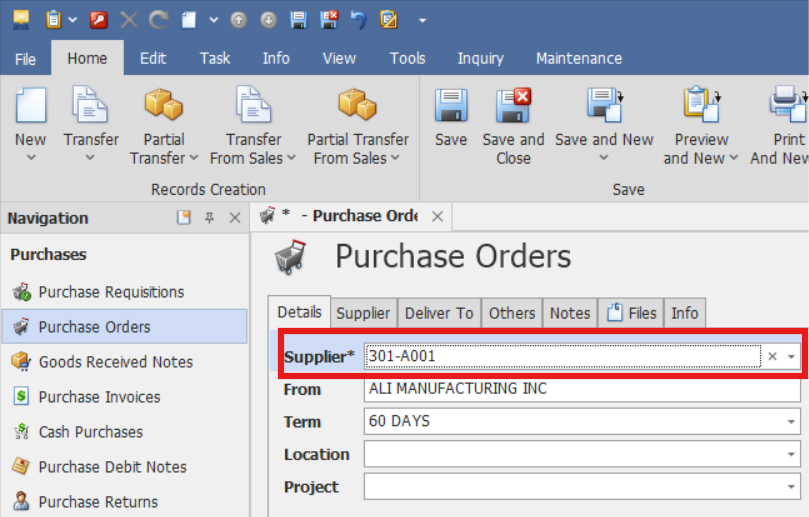
Select the Supplier code
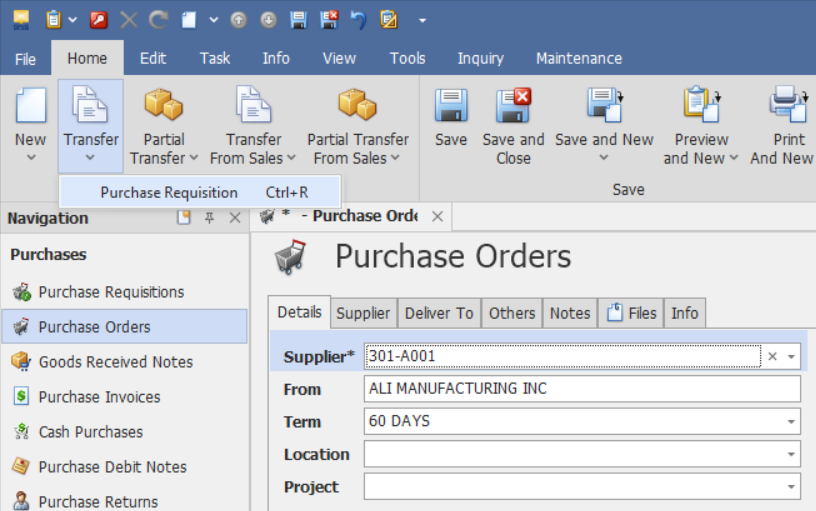
On the top part of the Purchase Order window, select the Transfer button. Then select Purchase Requisition.
Select the Purchase Requisitions needed to be transferred to the Purchase Order by clicking OK.
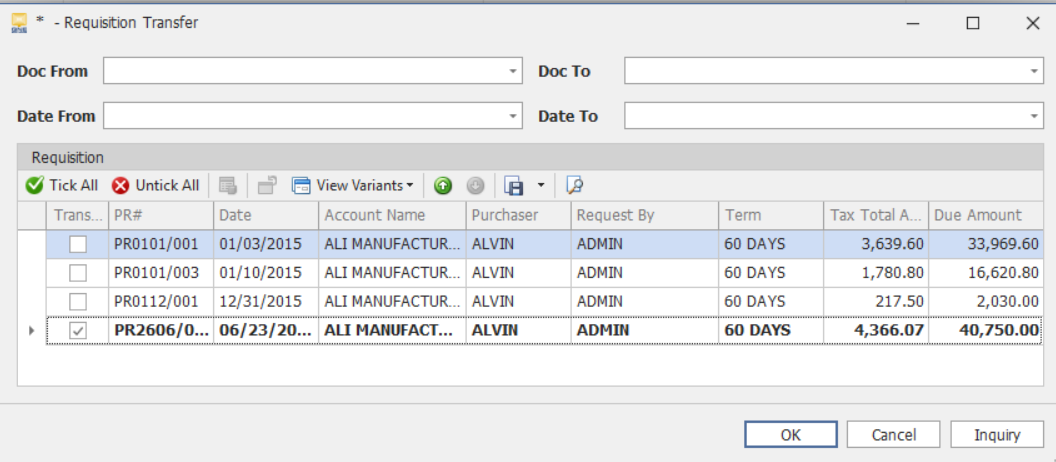
Once complete, the system copies all the details included in the Purchase Requisition document and has it prepared for the Purchase Order. Click Save if details are good to go.
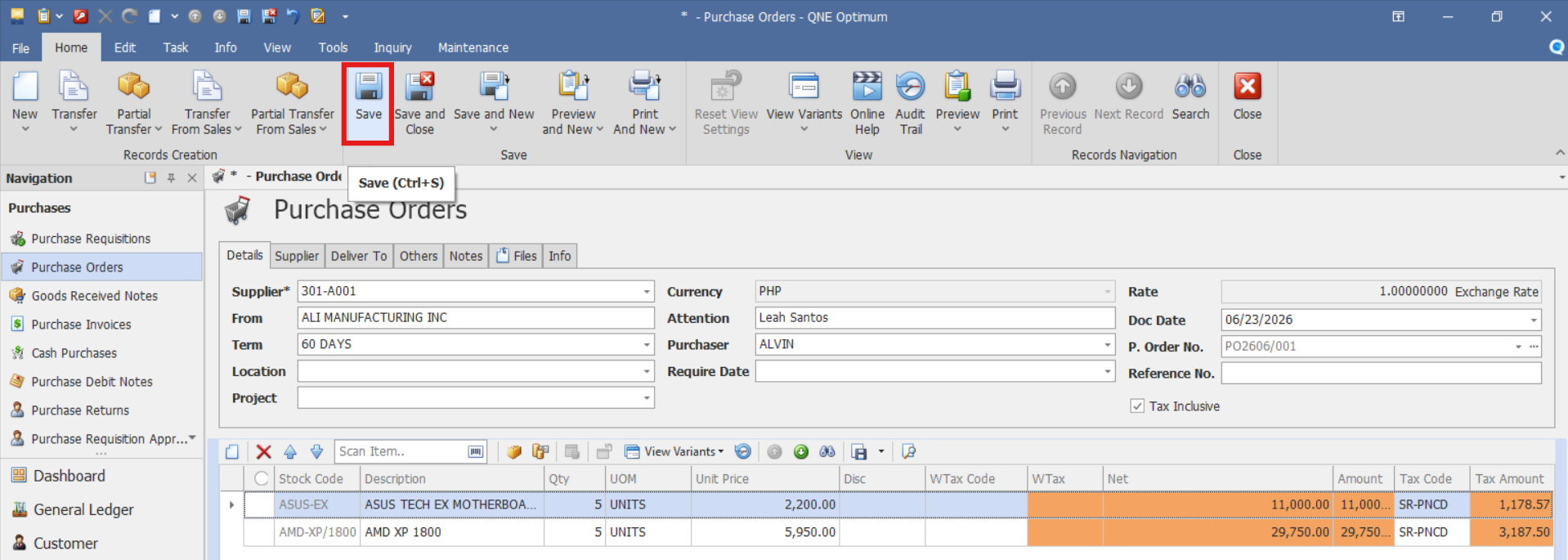
Option 2: Create a Purchase Order manually.
Fill in the required Header information, such as:
Supplier – Unique identifier for the supplier.
Attention - Supplier contact person.
Doc Date - Date when the Purchase Order is created.
Currency – Default is 1 for PHP. If using a foreign currency, manually enter the correct exchange rate.
Term – Payment terms agreed with the supplier (e.g., 30 days).
Require Date – Date the items are needed.
P. Order No. - Supplier purchase order number.
Reference No. - Internal reference number.
Purchaser – Person responsible for the purchase.
Location – Location where goods will be stored.
Tax Inclusive – Enable if prices include tax.
Project – Associated project (if applicable).

In the Details section, enter the item information
Stock Code – Stock code of the item.
Description – Automatically populated with the stock name once the Stock code is selected.
QTY – Quantity ordered.
UOM - Unit of Measure (e.g., pcs, boxes, liters).
Unit Price - Cost per unit.
Disc – Any Discount applied.
Tax - Tax rate, if applicable.
WTAX - Withholding tax, if applicable.
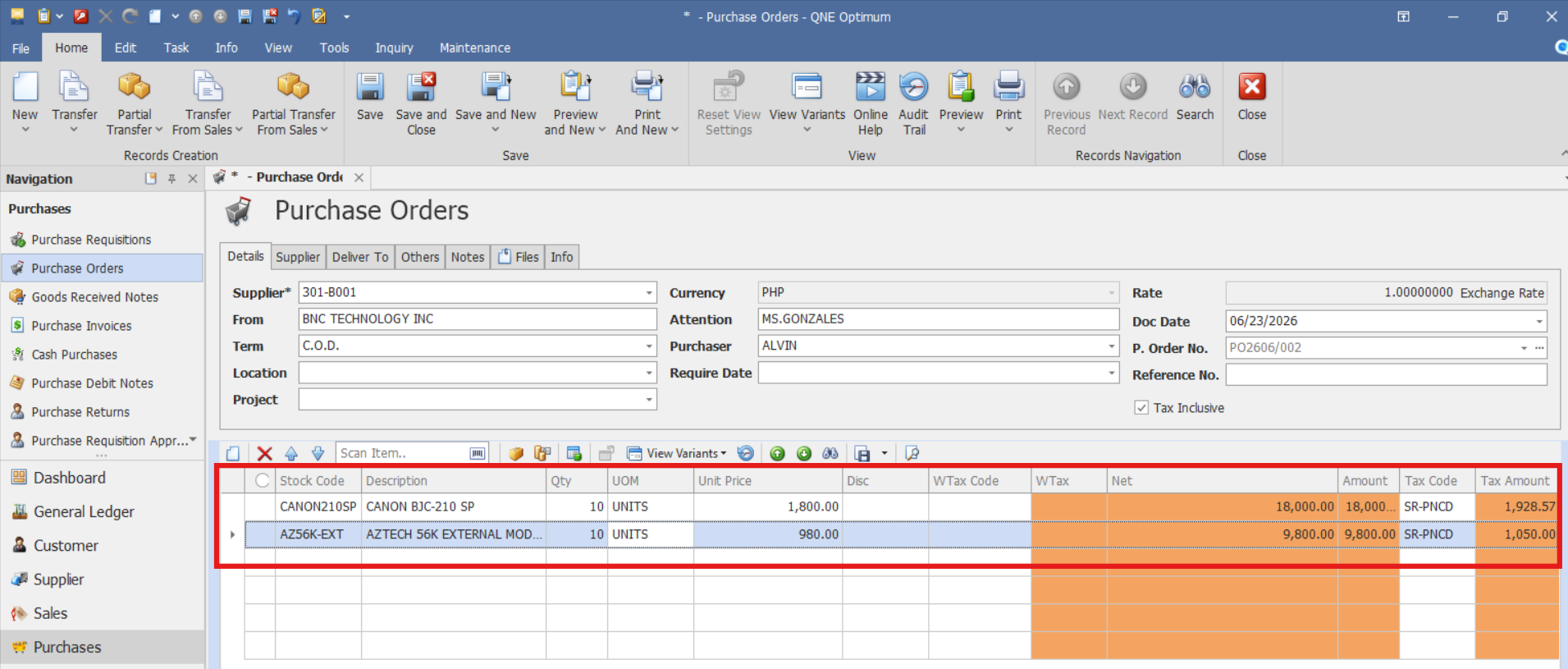
Procedure 2: Editing a Purchase Order
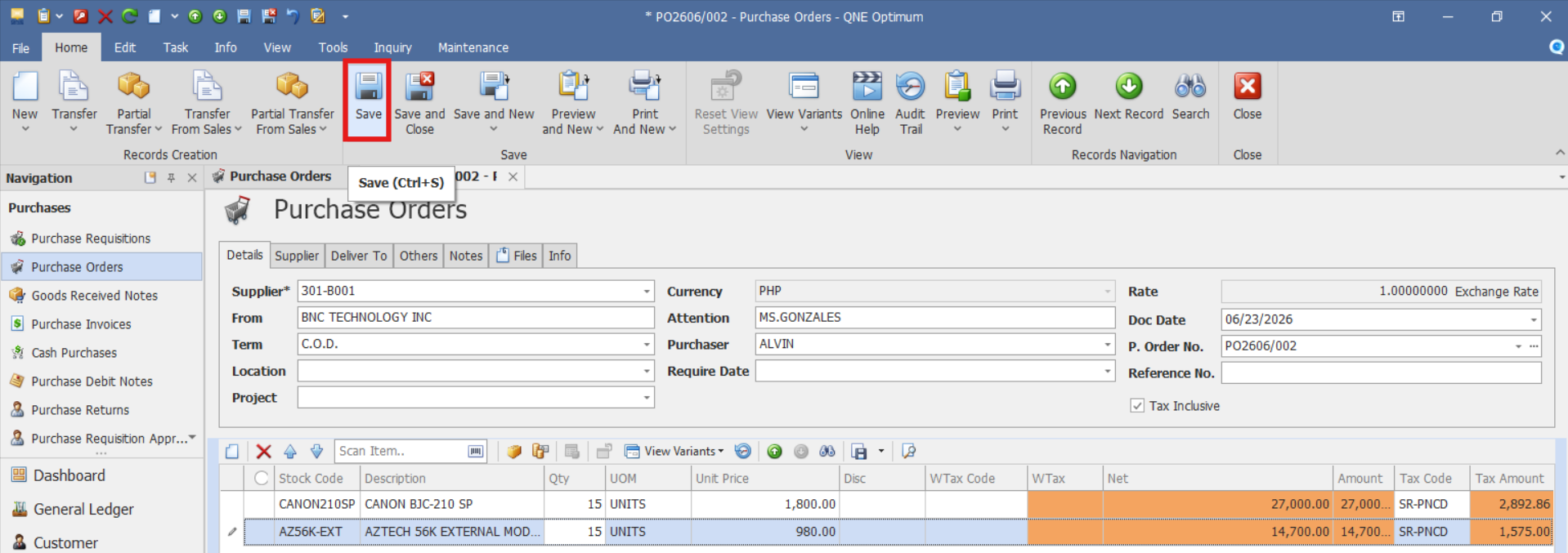
Go to Purchases > Purchase Order, then select the Doc # of the Purchase Order that you want to update.

Once opened, apply necessary adjustments on the document. Click Save to implement changes.
Procedure 3: Deleting a Purchase Order
In the Purchase Order List View, identify the document you wish to delete. Hover your cursor over the document and right-click on it. Then click Delete to remove the transaction.
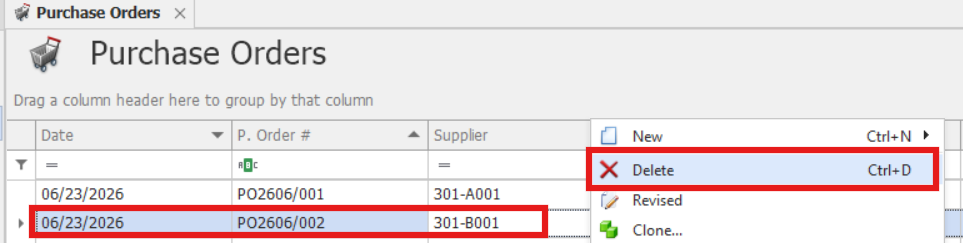
The document will be deleted in the Purchase Order list.
Application:
Example 1: Office Supplies Procurement
A finance team needs to order 10 reams of paper and 5 ink cartridges from a supplier. By creating a Purchase Order in the system:
The items, quantities, and agreed prices are recorded
The PO is sent to the supplier for confirmation
Upon delivery, the Purchase Order serves as a reference for receiving the goods and matching the supplier invoice
Example 2: Inventory Restocking
A retail business notices low stock levels of a fast-moving product. A Purchase Order is created to restock inventory:
Helps track committed purchases before goods arrive
Ensures inventory planning aligns with demand
Supports three-way matching (Purchase Order, Goods Receipt, Supplier Invoice)
Example 3: Service-Based Purchase
A company engages an external consultant. A Purchase Order is issued to document the agreed service fee and scope:
Acts as a formal agreement reference
Helps control expenses and approvals
Provides documentation for auditing and payment processing
Important Notes:
Editing and Deleting Transactions: Editing and deletion permissions may be restricted based on system configuration, organizational policy, or applicable regulatory requirements (CAS Approval). It's vital to adhere to your company's internal policy regarding these functionalities. It is generally advisable to disable or limit the ability to edit/delete to maintain compliance with regulations
System Scope: QNE Optimum
Was this article helpful?
That’s Great!
Thank you for your feedback
Sorry! We couldn't be helpful
Thank you for your feedback
Feedback sent
We appreciate your effort and will try to fix the article