A Purchase Debit Note is used to add charges to a supplier transaction after a Purchase Invoice has already been recorded. This is useful when adjustments such as supplier price corrections, billing discrepancies, or other supplier-approved charges need to be added to the original invoice involving inventory items or goods.
In QNE Optimum, Purchase Debit Notes help purchasing and accounting users update supplier balances accurately, maintain complete purchase records, and ensure financial reports reflect the correct payable amounts.
Use Purchase Debit Notes when the adjustment involves inventory or goods. For supplier adjustments that do not involve inventory items, use Supplier Debit Note instead.
Scenario:
Your company receives inventory items from a supplier and records a Purchase Invoice. After posting the invoice, the supplier notifies you that a price adjustment for the goods was not included in the original billing.
To update the supplier’s payable balance and correctly reflect the cost of the inventory purchased, you create a Purchase Debit Note in QNE Optimum.
Procedure 1: Recording a Purchase Debit Note
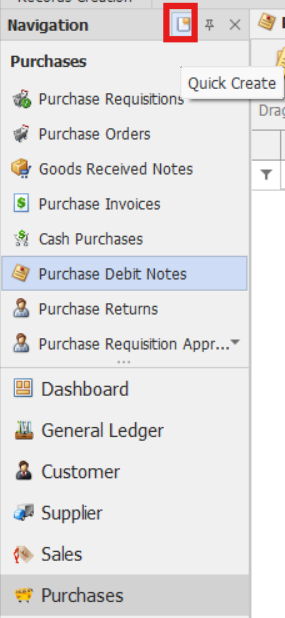
In the navigation pane, go to Purchases > Purchase Debit Notes
Note: If the Quick Create Icon (the one inside the red box) is highlighted, clicking Purchase Debit Notes will immediately redirect you to the new Purchase Debit Notes transaction form. If the Quick Create Icon is not highlighted, you will be directed to the Purchase Debit Note Listing instead.
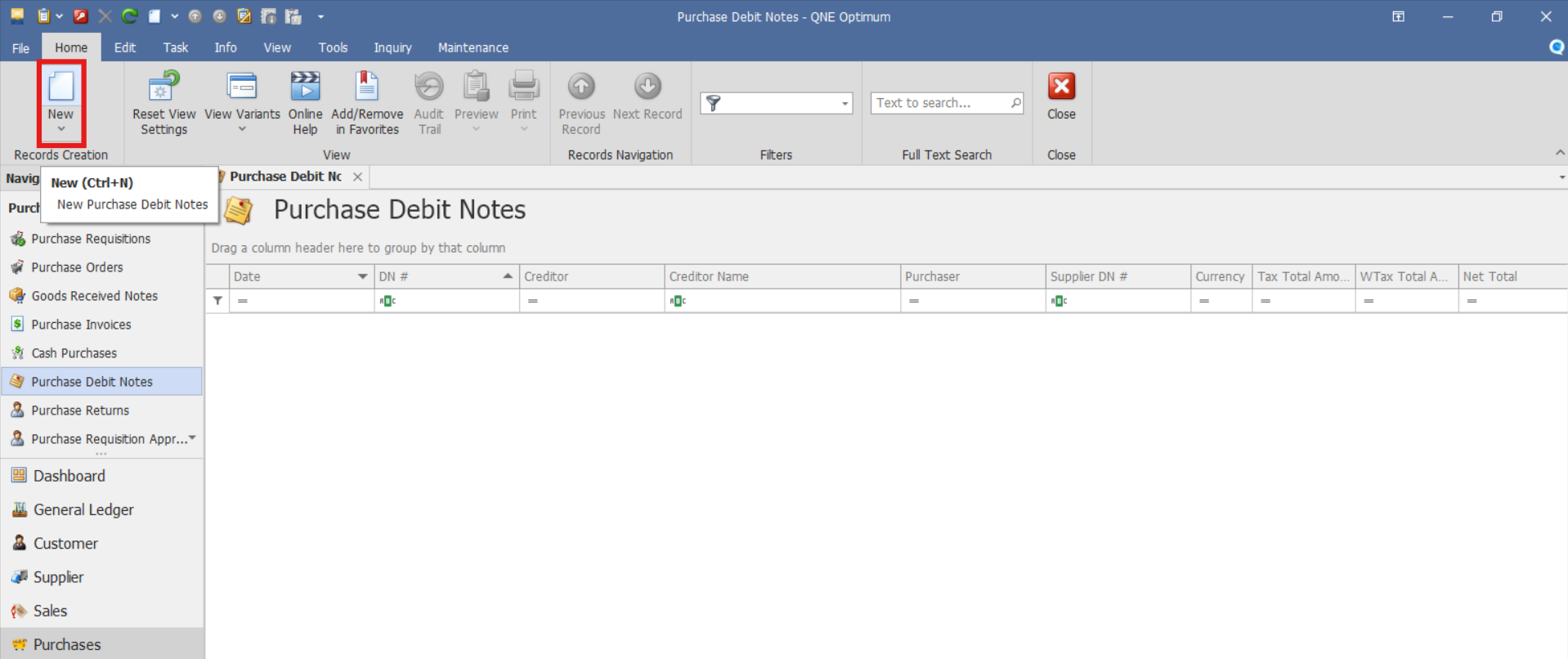
From there, select the New button to create a new Purchase Debit Notes transaction.
Enter the necessary information:
Header fields:
Supplier – Select the supplier for the transaction.
Date – Enter or confirm the transaction date.
DN No. - Unique Purchase Debit Note number assigned to the transaction. It may be auto-generated based on the company's numbering sequence.
Supplier DN # - Supplier's own debit note reference number, if one has been issued by the supplier. Used for reconciliation between both parties.
Creditor DO No. - Reference number of the supplier's Delivery Order related to the purchase transaction.
Purchaser - Employee or purchaser responsible for the original purchase transaction.
Project - Project code or project name associated with the purchase transaction, if applicable.
Term - Payment term associated with the supplier or transaction (e.g., 30 Days, 60 Days).
Location - Warehouse, branch, or business location associated with the returned goods or purchase adjustment.
Ref Purchase Inv - Reference to the original Purchase Invoice that is being adjusted or corrected by the debit note.

Detail fields:
Stock Code – Stock code of the item.
Description – Automatically populated with the stock name once the Stock code is selected.
F.Desc – Additional details about the item if needed.
QTY – Quantity associated with the debit note adjustment.
UOM - Unit of Measure (e.g., pcs, boxes, liters).
From GRN - Displays the source GRN document.
Unit Price - Cost per unit.
Disc – Any Discount applied.
Tax - Tax rate, if applicable.
WTAX - Withholding tax, if applicable.
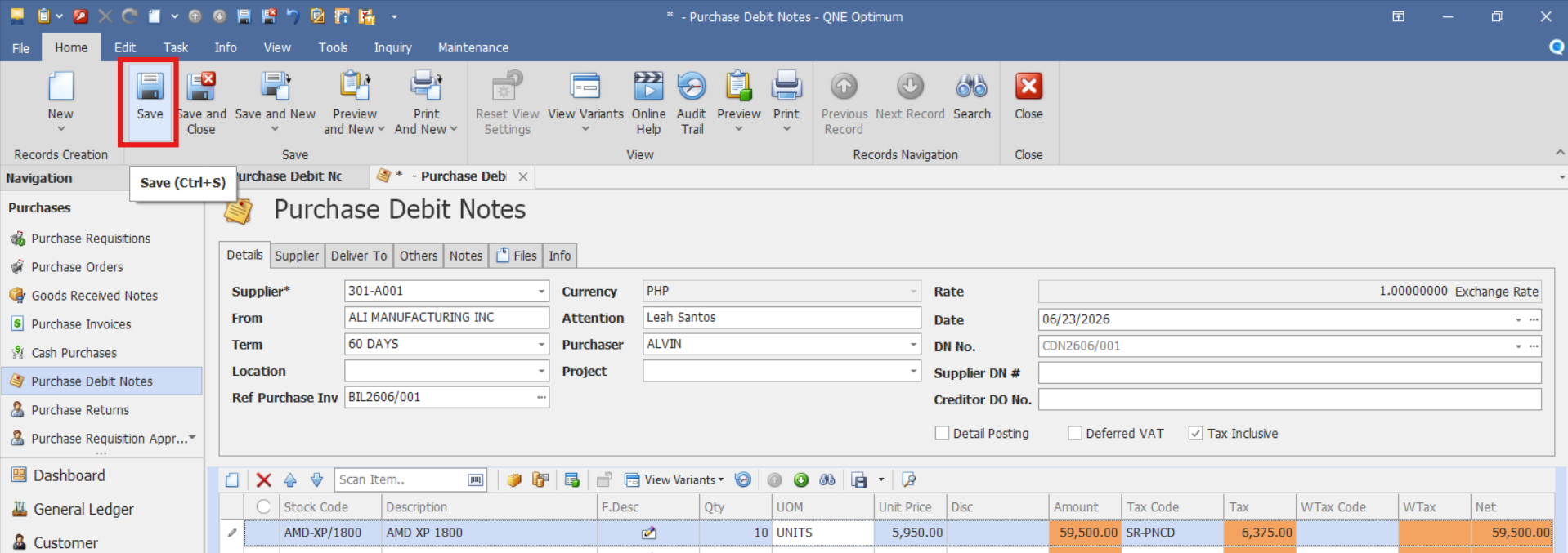
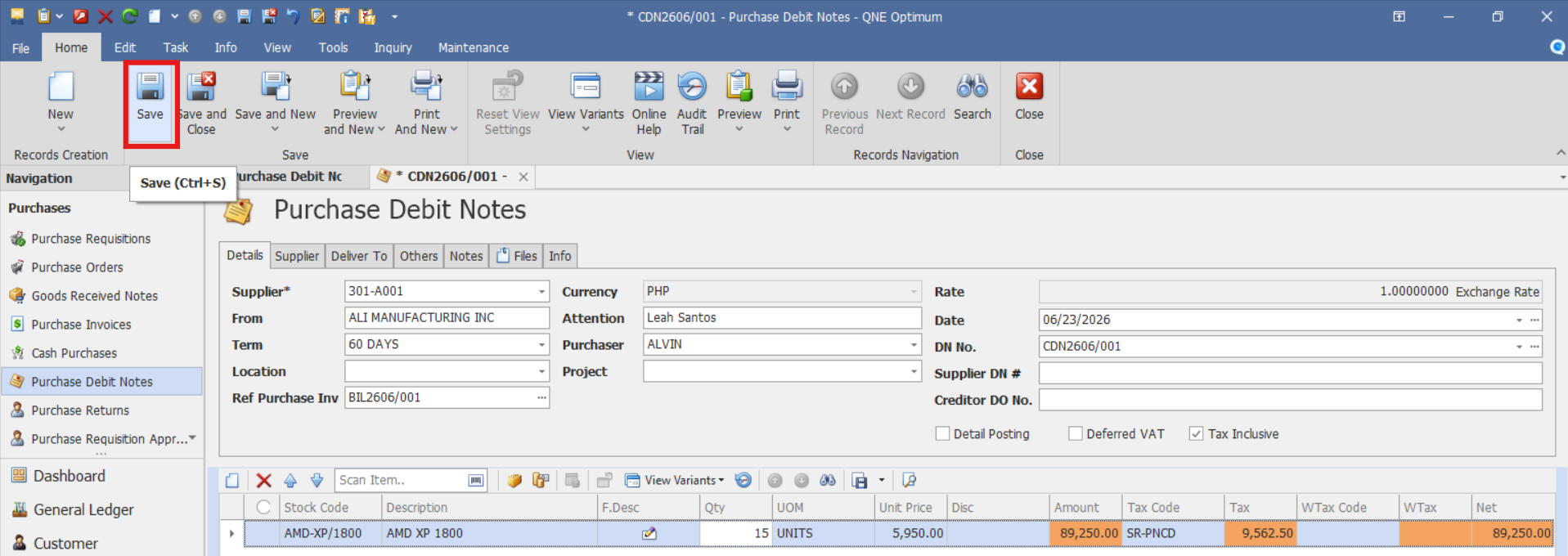
Once complete, Click Save.
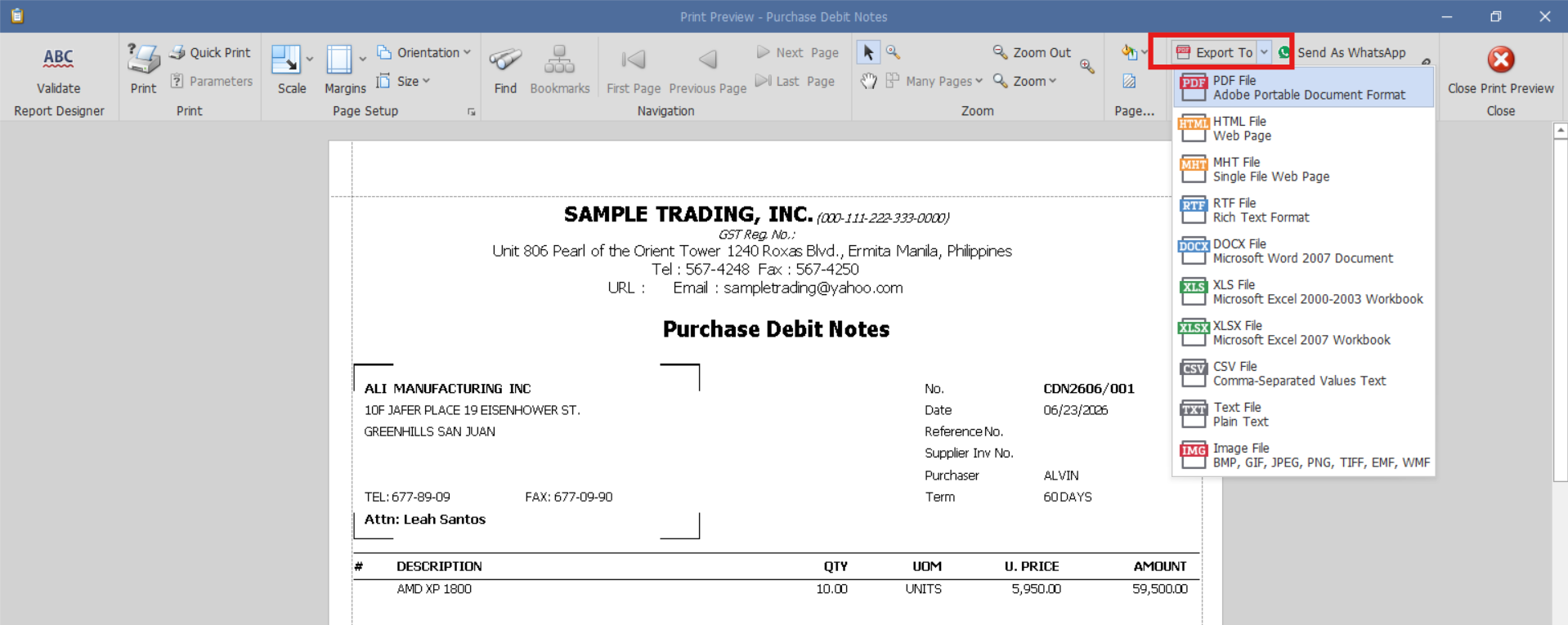
Click Preview to review the Purchase Debit Notes Voucher and confirm that the transaction details are correct.
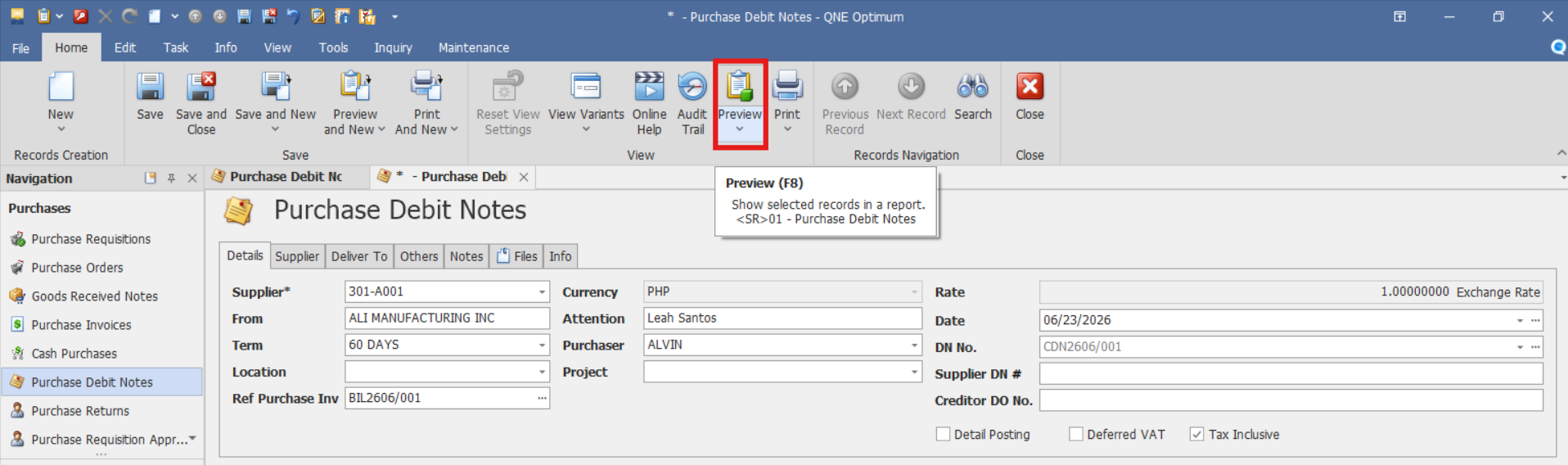
You may also print or export the document as needed for record-keeping and audit purposes.
Procedure 2: Editing a Purchase Debit Note
Go to Purchases > Purchase Debit Notes, then select the Doc # of the Purchase Debit Note that you want to update.

Once opened, apply necessary adjustments on the document. Click Save to implement changes.
Procedure 3: Deleting a Purchase Debit Note
In the Purchase Debit Notes List View, identify the document you wish to delete. Hover your cursor over the document and right-click on it. Then click Delete to remove the transaction.

The document will be deleted in the Purchase Debit Notes list.
Application:
The Purchase Debit Note can be used to:
Record supplier price corrections for purchased goods when the original purchase invoice amount needs to be increased.
Adjust underbilled purchase invoices to reflect the correct payable amount for inventory items received.
Update the cost of purchased goods when a billing adjustment related to the items is identified after the invoice is recorded.
Correct inventory-related purchase transactions without deleting or modifying the original purchase invoice.
Maintain accurate supplier balances and audit records when additional charges for goods must be documented.
Important Notes:
Editing and Deleting Transactions: Editing and deletion permissions may be restricted based on system configuration, organizational policy, or applicable regulatory requirements (CAS Approval). It's vital to adhere to your company's internal policy regarding these functionalities. It is generally advisable to disable or limit the ability to edit/delete to maintain compliance with regulations.
System Scope: QNE Optimum
Was this article helpful?
That’s Great!
Thank you for your feedback
Sorry! We couldn't be helpful
Thank you for your feedback
Feedback sent
We appreciate your effort and will try to fix the article